

The latest NDIS funding changes are now in effect. From 1 October 2026, the changes apply when new NDIS plans are created or existing plans are reassessed. They do not currently apply to plan renewals.
Every NDIS plan is different. This Reform Ready update explains the key dates, what the changes may mean for you and what you can do now to prepare.
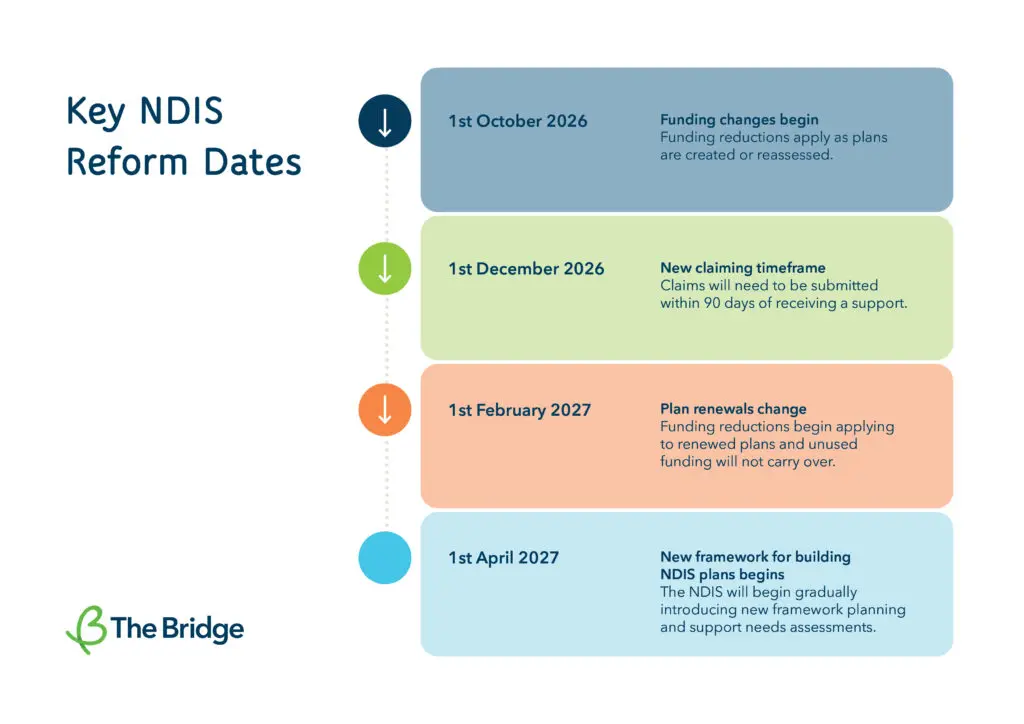
Key NDIS Reform dates
The NDIS reforms are being introduced in stages. Some changes have already started, while others will begin throughout 2027.
From 1 October 2026: Funding Changes Have Started
From 1 October, funding reductions began applying as plans are created or reassessed. The changes include a 50% reduction to Social, Economic and Community Participation (SECP) funding (previously called social, civic and community participation) and a 10% reduction to Improved Daily Living Skills (IDLS) funding (previously capacity building daily activities).
For now, these changes only apply to new plans and plans being reassessed. They will not apply to plan renewals until 1 February 2027.
What can you do now?
- Check your funding. Know how much funding you have available for social and community activities.
- Use your funding wisely. Use it for eligible supports that meet your needs and goals.
- Talk about the supports you need. Speak with your provider, Support Coordinator or LAC about the supports you rely on and why they are important.
- Keep your information up to date. Make sure your current support needs are clearly documented.
- Share relevant information with The Bridge. Sharing relevant parts of your NDIS plan can help us understand your funding and supports and prepare for changes.
From 1 December 2026: New Claiming Timeframes
From 1 December 2026, claims will need to be submitted within 90 days of receiving a support.
What can you do now?
- If you self-manage your plan. Set a reminder to check your spending and submit claims soon after you receive an invoice.
- If your plan is plan managed. Check that your plan manager knows about the new timeframe and is submitting claims on time.
- Keep your records organised. Make sure invoices, receipts and other important records are up to date and easy to find.
- Respond to requests for information. If the NDIA, your Support Coordinator or The Bridge asks for information about your plan or supports, respond as soon as you can.
From 1 February 2027: Prepare for Plan Renewals
From February 2027, plan renewals will replace plan continuations, previously called rollovers.
Plans that have not already been created or reassessed since 1 October 2026 will move through renewal between 1 February and 30 September 2027. If your plan is due to end during this time, the changes will apply when it is renewed.
If the NDIA brings your renewal forward so it happens before the end of September 2027, the NDIA has advised that you will receive around 60 days’ notice to prepare.
What can you do now?
- Check your plan end date. Know when your plan is due to end so you can prepare.
- Plan to use your funding before your plan end date as it will not get rolled into your new plan. Use your available funding for eligible supports that meet your needs.
- Be ready if your renewal happens earlier. Use the notice period to review your plan and prepare for the changes.
- Keep your information current. Make sure your reports clearly explain your support needs and the supports you rely on.
- Read NDIA updates carefully. Pay attention to information about your plan and any action you need to take.
From 1 April 2027: A New Framework for Building NDIS Plans
From April 2027, the way NDIS plans are developed will begin to change with the introduction of new framework planning. This will include a new support needs assessment being developed by the NDIA.
The process is still being tested and refined, so you do not need to make changes to your current plan now. However, you can start getting your information ready.
What can you do now?
- Ask your health professionals to explain the support you need. Ask them to describe what you can do on your own, where you need help and how support helps you.
- Use real-life examples. Keep examples of how your disability affects your everyday life and when you need support.
- Keep your information up to date. Make sure it explains your current support needs, not just your diagnosis.
Use Support Coordination
If Support Coordination is funded in your NDIS plan, now is a good time to use it.
Support Coordination can help you:
- understand your plan and funding
- explore your support options
- connect with providers
- prepare for future plan changes or reassessments
If you don’t have Support Coordination but think it could help, talk to your NDIA planner about including it in your next plan. The support available will depend on what is funded in your plan.
Stay Reform Ready
The Bridge will continue sharing practical Reform Ready updates as the NDIS changes roll out.
You don’t need to understand every change at once. For now, focus on your current plan, how you use your funding and what you may need in the future.
When reviewing your plan, consider:
- Could any of your 1:1 supports work in a group setting while still meeting your needs?
- Are there times when family, carers or other informal supports can help, so you can use funded supports when you need them most?
- Which supports use more of your budget, such as weekend or 1:1 supports? Are there other suitable options that could help your funding go further?
- Are your current supports still meeting your needs and helping you work towards what is important to you?
Everyone’s situation is different, and your supports should be based on your individual needs.
If you’re unsure about your options, talk to your Service Manager at The Bridge or email info@thebridgeinc.org.au and we’ll connect you with someone who can help.
For more NDIS Reforms information – head to our NDIS Reforms webpage.